What Is a Monologue? Definition, Types and Examples from Plays
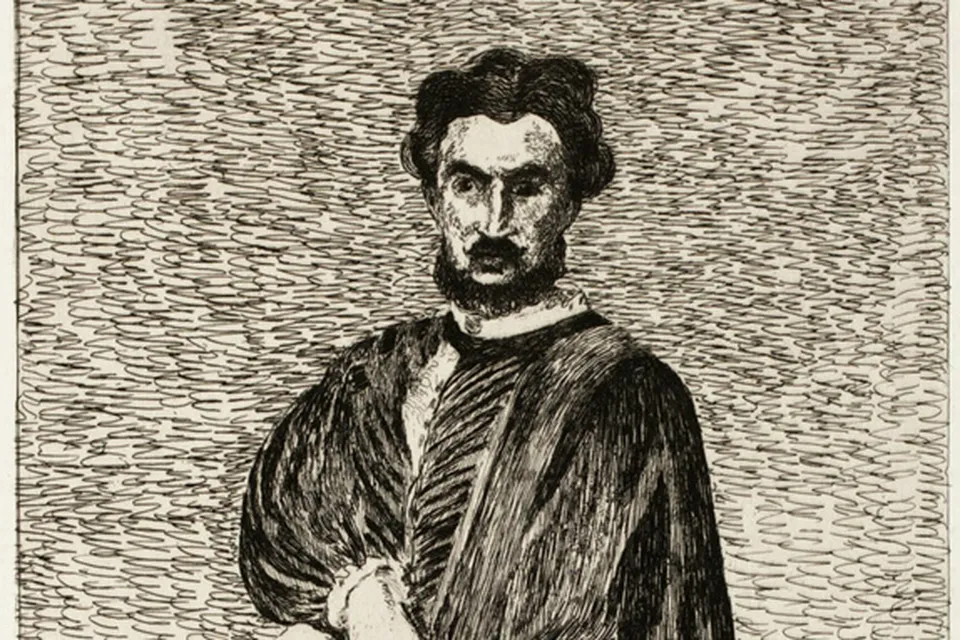
Every acting student hears the word in the first week, and every audition notice seems to ask for one. Yet "monologue" covers several different things: a speech to another character, a speech to nobody, a poem in a character's voice, a comedian's set. Knowing which kind you are holding changes how you play it. This guide gives the definition, the main types with examples you can read for free, and what each type asks of the person performing it.
The definition
In the theatre, a monologue is a long, unbroken speech by one character. Others may be present, but for the length of the speech they do not interrupt: the play hands the stage to one voice. Merriam-Webster lists the senses that matter to actors: a speech in which a character speaks alone, a dramatic sketch performed by one actor, a stand-up comic's routine, a literary composition written in that form, and, in everyday use, a long speech that dominates a conversation. The dictionary dates the theatrical sense in English to the middle of the sixteenth century.
The word comes through French from two Greek roots: monos, alone or single, and logos, speech. Its opposite is the dialogue, where the speech passes between people. That opposition is useful in rehearsal: a monologue is not the absence of dialogue but a dialogue in which only one side is spoken aloud.
Monologue, soliloquy, aside: three neighbours
The three terms are often used loosely. In practice they describe who the speech is aimed at.
- Monologue (in the strict sense): the character speaks to someone on stage, or on the other end of a phone, and wants something from them. The listener's silence is part of the scene.
- Soliloquy: the character is alone, or behaves as if alone, and thinks aloud. The audience overhears a mind at work. Hamlet's "To be, or not to be" is the most quoted example.
- Aside: a short remark to the audience, or to one character, that the others on stage are understood not to hear. It is a line or two, not a speech.
The boundary between monologue and soliloquy moves from one book to another: some critics call every long solo speech a monologue and reserve "soliloquy" for the speaker alone on stage. For an actor the practical question is always the same: who am I talking to, and what do I want from them?
The five types you will meet
1. The persuasive monologue
A character tries to move a listener: to forgive, to act, to change sides. The classic example is Mark Antony's funeral speech, "Friends, Romans, countrymen, lend me your ears", in act 3, scene 2 of Julius Caesar. Antony begins by promising not to praise Caesar and ends with a crowd ready to riot. The speech works because the listeners change as he speaks, and every new tactic is a response to how they react.
2. The soliloquy
The character is alone and argues with themselves, or with an absent person, or with the audience treated as a confidant. Hamlet's "To be, or not to be" opens act 3, scene 1 of Hamlet. Read it as a debate rather than a meditation and it comes alive: two arguments, each answered before it can settle. Actors who play it as mood rather than reasoning tend to lose the room.
3. The set piece or reflective speech
Some speeches stop the plot to look at the world. Jaques's "All the world's a stage", in act 2, scene 7 of As You Like It, walks through the seven ages of a life. It is addressed to the Duke and his company, so it is technically a monologue, but its energy comes from a man showing off his own melancholy. The danger with a set piece is recitation; the cure is to find who on stage the speaker wants to impress or provoke.
4. The narrative monologue
A character tells a story that happened offstage: a messenger's report in Greek tragedy, a confession, a memory that explains everything. The actor's task is to make the listener see the events, and to let the telling change the teller. Many contemporary audition speeches are of this kind, which is why panels hear so many of them.
5. The dramatic monologue (in poetry)
In literature the term has a specific meaning: a poem spoken by a character, not the poet, to a silent listener, revealing more than the speaker intends. Robert Browning's "My Last Duchess" (1842), in which a duke shows a visitor his late wife's portrait, is the textbook case. The form has a long life on stage: one-person shows and many audition speeches use the same trick of a speaker who gives himself away.
Comic and one-person monologues
Outside drama, the word covers the stand-up routine and the solo show, where a single performer carries the whole evening. The craft overlaps more than it seems: the comedian, like Antony, adjusts to the room line by line. If you are building solo material, our guide on how to write a monologue sets out the four things any speech needs: a listener, a want, an obstacle and a turn.
What a monologue asks of an actor
- A listener, even an imagined one. Place the person you are talking to, just off the camera line or past the panel, and play to change them.
- Beats. Mark where a tactic fails and a new one begins. A two-minute speech usually holds three to six of them.
- An ending that lands. The last line should leave the speaker somewhere new: decided, defeated, exposed.
- Context. Read the whole play. A speech lifted from its scene loses half its meaning, and panels can tell.
- Time. Most audition notices ask for one to two minutes. Time the speech out loud, at playing pace, before you commit to it.
To find speeches to work on, start with our method for choosing an audition monologue, then read whole plays for free through the libraries and archives listed in where to read plays. Once you have chosen, our guide to memorizing lines sums up what research on actors says about learning a long speech.
Sources
- Merriam-Webster, "monologue", definitions and etymology, consulted 29 November 2026.
- William Shakespeare, Julius Caesar 3.2, Hamlet 3.1 and As You Like It 2.7, Folger Shakespeare editions, Folger Shakespeare Library.
- Robert Browning, "My Last Duchess", Dramatic Lyrics, 1842.
 Reads & auditions
Choosing an audition monologue
Read the notice, play close to your casting, build a contrasting pair and time it out loud.
 Reads & auditions
Writing a monologue
A listener, a want, an obstacle and a turn: the four things a speech needs, shown on a short original monologue.
 Reads & auditions
How to memorize lines
Why actors learn meaning before words, and a research-backed plan for getting off book.