How to Memorize Lines: What Research on Actors Actually Shows
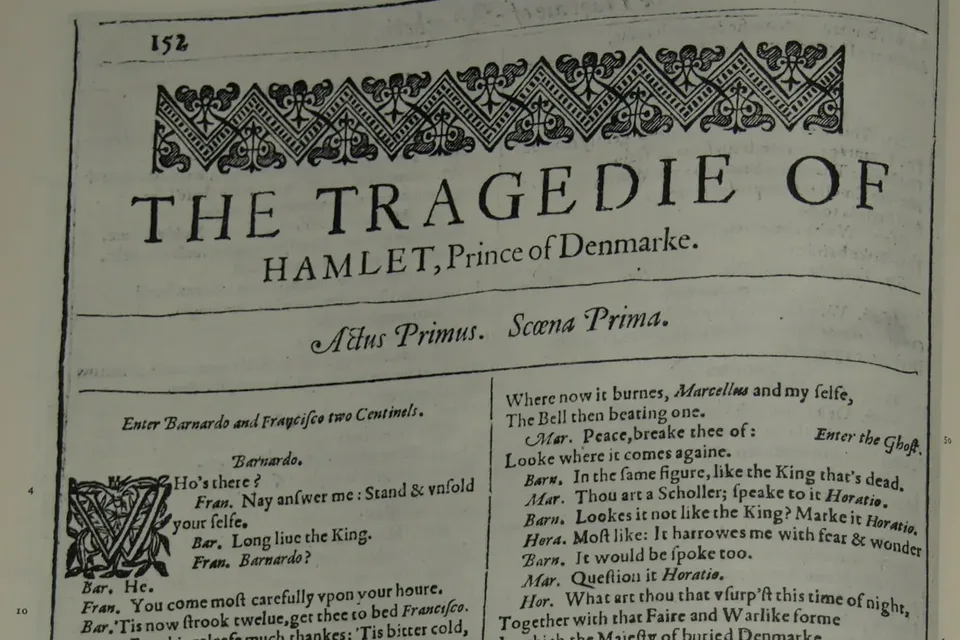
Most actors learn lines the way they learned spelling lists at school: read, cover, repeat, panic. It works, slowly, and it tends to produce lines that come out flat and fall apart under pressure. Thirty years of research on how professional actors memorize suggests a better order: understand first, then test yourself, spaced out over days, preferably on your feet.
This guide summarises what that research found and turns it into a plan you can use for anything from a two-page self-tape to a full role. It is the other half of preparing a cold read: there you keep the page in your hand; here the goal is to put it down.
What studies of actors found
The most sustained work on actors' memory comes from the psychologist Helga Noice and the actor and director Tony Noice, who from the early 1990s interviewed and tested professional actors about how they learn roles. Their findings, summarised in "What Studies of Actors and Acting Can Tell Us About Memory and Cognitive Functioning" (Current Directions in Psychological Science, 2006), surprised many memory researchers:
- Experienced actors rarely learn by rote. In Helga Noice's 1992 study of professional actors' learning strategies (Applied Cognitive Psychology), the actors described working out what the character means and wants line by line, and why they say each thing at that moment, rather than repeating the words until they stick.
- The words come as a by-product. Because each line is tied to a reason, the next line is cued by the logic of the scene: the character says this because the other person just said that. Memory for the exact words follows from the analysis.
- Commitment in the moment matters. The Noices called the actor's full engagement with the meaning of each line, as if it were being said for real, "active experiencing", and they later used it as the basis of a training programme for non-actors.
That training programme gives the most practical evidence. In their experiments with non-actors given only brief coaching, people who worked through a script the way actors do retained more of it than people who simply set out to memorize it. A 2017 trial with 179 older adults, published in Frontiers in Aging Neuroscience, found that four weeks of active-experiencing training improved episodic memory recall more than a theatre history class did, with gains still visible four months later. A 2014 review by Tony Noice, Helga Noice and Arthur Kramer in The Gerontologist, Participatory arts for older adults, places these results alongside studies of music, dance and visual arts.
Move while you learn
One finding is directly usable in any rehearsal. In "Learning dialogue with and without movement" (Memory & Cognition, 2001), the Noices had non-actors learn a scene in one of several ways. Those who read the dialogue aloud while moving as a director instructed remembered more than those who only spoke the lines or who deliberately memorized them. And within the same person's performance, speeches that had been accompanied by movement were recalled better than speeches delivered standing still.
The practical lesson: learn lines on your feet, with the blocking if you have it, and with simple purposeful actions if you do not. Pick up the cup on the line where you would, cross on the line that pushes the other person away. A line tied to a physical action has two routes back into memory instead of one.
Test yourself instead of rereading
Memory research outside the theatre adds two well-established principles.
Retrieval practice. In a 2006 study in Psychological Science, Henry Roediger and Jeffrey Karpicke had students either reread a prose passage or try to recall it without looking. After five minutes, rereading looked better. After two days and after a week, the students who had tested themselves remembered substantially more, even though the rereaders felt more confident. For an actor, this means that covering the page and trying to say the line, then checking, beats reading the script again, even though rereading feels more productive.
Spacing. A meta-analysis by Nicholas Cepeda and colleagues (Psychological Bulletin, 2006), covering 317 experiments, confirmed that spreading study sessions out produces better long-term retention than cramming the same amount of practice into one session, and that the best gap between sessions grows the longer you need to remember. Four twenty-minute sessions over four days will serve you better than one eighty-minute session the night before.
A plan for getting off book
Adapt the timings to how much you have and when you need it, but keep the order.
- Read the whole play or episode, not just your scenes. You cannot know why your character says something if you do not know what happened before.
- Break each scene into units. Mark where the subject or the tactic changes. For each unit, write in the margin what your character wants and what they are doing to get it.
- Work out why each line follows the previous one. Especially your cue lines: what in the other person's line makes you say yours? If you cannot answer, that is the line you will forget.
- Speak it aloud, on your feet. Move through the space with simple actions tied to specific lines.
- Cover and recall. Hide your line, read the cue, try to say yours, then check. Mark the lines you miss and start the next session with those.
- Space the sessions. Short daily sessions beat a single long one. Run the whole scene from memory at the start of each session before looking at anything.
- Run lines with a partner who corrects you exactly. Paraphrase that slips through in private becomes a habit. In new plays especially, writers notice changed words, as anyone who has sat through a new-play reading night will know.
A common shortcut is to write down only the first letter of each word of a speech and practise from that. It works as a form of retrieval practice, because you have to produce each word yourself. Use it after you understand the speech, not instead of understanding it.
Short-notice sides and self-tapes
When sides arrive the night before a self-tape, there is no time for spacing over a week, but the order still applies. Spend the first part of your time on meaning (what do you want, where is the turn), then alternate recall attempts with short breaks rather than reading the page over and over. If you sleep before the shoot, do one recall run that evening and another in the morning. On tape, many casting notices accept a page in hand for short-notice material; check the instructions, and see our self-tape setup guide for keeping it out of frame if you need it.
When lines go
Every actor dries eventually. What helps most in the moment is the same thing that helps you learn: knowing what your character wants. If the words go, keep pursuing the action with words of your own that move the scene to the next cue; a scene partner can follow intention far more easily than silence. Afterwards, find the exact point where you lost it. Almost always it is a transition you never fully understood, and that is where the next session starts.
Sources and further reading
- Noice, H. and Noice, T. (2006). What Studies of Actors and Acting Can Tell Us About Memory and Cognitive Functioning. Current Directions in Psychological Science 15(1): 14–18.
- Noice, H. (1992). Elaborative memory strategies of professional actors. Applied Cognitive Psychology 6(5): 417–427.
- Noice, H. and Noice, T. (2001). Learning dialogue with and without movement. Memory & Cognition 29(6): 820–827.
- Banducci, S. E. et al. (2017). Active Experiencing Training Improves Episodic Memory Recall in Older Adults. Frontiers in Aging Neuroscience 9: 133.
- Noice, T., Noice, H. and Kramer, A. F. (2014). Participatory arts for older adults: a review of benefits and challenges. The Gerontologist 54(5): 741–753 (open access via PubMed Central, U.S. National Library of Medicine).
- Roediger, H. L. and Karpicke, J. D. (2006). Test-enhanced learning: taking memory tests improves long-term retention. Psychological Science 17(3): 249–255.
- Cepeda, N. J., Pashler, H., Vul, E., Wixted, J. T. and Rohrer, D. (2006). Distributed practice in verbal recall tasks: a review and quantitative synthesis. Psychological Bulletin 132(3): 354–380.
 Reads & auditions
Preparing a cold read
What to do in the minutes you have with the sides, and how to take a redirect.
 Reads & auditions
Self-tape setup
Camera, framing, eyeline, light and sound for a clean audition tape without expensive gear.
 Reads & auditions
Running a reading night
Choosing scripts, casting, rights, rehearsal time and a feedback session that helps the writer.