Cold Read Series: How to Run a New-Play Reading Night
A cold read series is a recurring event where actors read new or unfamiliar scripts aloud, usually with little rehearsal and scripts in hand, so that writers can hear their work and audiences can respond. Run well, it is one of the cheapest and most useful things a theatre community can do: writers get a draft off the page, actors get practice, and everyone meets collaborators.
Cold read, reading, staged reading: the vocabulary
- Cold read: actors see the text for the first time on the day, or read it with only a quick run-through. The emphasis is on hearing the words.
- Table read or reading: actors sit, often at a table or on chairs in a line, and read with a narrator for stage directions. There may be a short rehearsal.
- Staged reading: more rehearsal (often a few hours to a few days), with simple movement, music stands and some suggested staging. Scripts stay in hand.
A series can mix these. What makes it a series is the rhythm: a regular night, a predictable format, and an audience that comes back.
Decide what the series is for
Before booking a room, agree in one or two sentences on the purpose, because it shapes every other decision.
- Developing writers. The script is the point. Choose drafts that are ready to be heard, give the playwright control over casting notes and the feedback format, and keep the actors focused on clarity.
- Actor practice. Scenes or short plays, truly cold, with many actors rotating. Feedback focuses on the reading rather than the script.
- Community building. A social evening around new work. Keep it short, informal and regular, and leave time to talk afterwards.
Finding scripts
Most series draw on writers in their own circle, but an open call helps you reach beyond it. Ask for a short synopsis, character breakdown, running time and a sample of pages. Set a page limit that fits your format: a full-length play read aloud with stage directions usually takes longer than its eventual production would. For short-play nights, ten-minute plays are a common unit.
The New Play Exchange, run by the National New Play Network, is a large searchable database of scripts by living writers and a good place to find work and contact playwrights directly.
Rights and permission
A reading is still a performance of someone's copyrighted work. For a new, unpublished play, get the playwright's explicit permission and agree on simple terms: whether the event is public or invited, whether it may be recorded (default: no), whether you can use the title in publicity, and that the writer keeps all rights. For a published play, a public reading generally needs permission from the play's licensing house even if admission is free; contact the licensor named in the acting edition before announcing anything.
The Dramatists Guild publishes "The Dramatists Bill of Rights", setting out principles such as the writer's approval over changes to the text. Following it costs nothing and builds trust with writers.
Casting
- Ask the writer what matters for each role, and cast for that rather than for appearance alone.
- Keep a pool of reliable actors who are good at reading cold; add new names each month so the pool does not close.
- Cast a strong, neutral narrator for stage directions. The narrator controls the pace of the whole evening.
- Be transparent about time commitment and whether there is any pay. Many community series are unpaid; if so, say so plainly in the call.
- If you cast union members, check the union's rules for readings before you confirm. Actors' Equity has specific codes and policies for readings and showcases involving its members.
Rehearsal: how much is enough?
A true cold read needs only a quick pre-show meeting: hand out scripts, confirm pronunciations, mark cuts, and agree on who reads which stage directions. Even an hour of read-through dramatically improves clarity, and many series settle on a single rehearsal on the day. Whatever you choose, keep it consistent so actors know what they are signing up for.
Running the night
- Welcome and framing (two minutes): explain that this is a work in progress and how feedback will work.
- The reading: with a narrator and scripts in hand. Keep intervals short.
- Feedback: moderated, time-limited and shaped by what the writer wants to learn.
- Social time: often where the most useful conversations happen.
Feedback that helps writers
Unstructured feedback sessions drift into audience members rewriting the play they would have written. A moderator and a format prevent that. A widely used approach is Liz Lerman's Critical Response Process, which runs in steps: responders first say what was meaningful to them, then the artist asks questions, then responders ask neutral questions, and only then offer opinions, with the artist's permission. A simpler version:
- Ask the writer for two or three questions they want answered before the reading.
- Start with what people remember and what moved or surprised them.
- Turn the writer's questions to the room.
- Allow opinions only when framed as "I wondered..." or "I wanted more of...", and never fixes.
- End on time, and offer a written comment form for anything left.
Space, timing and money
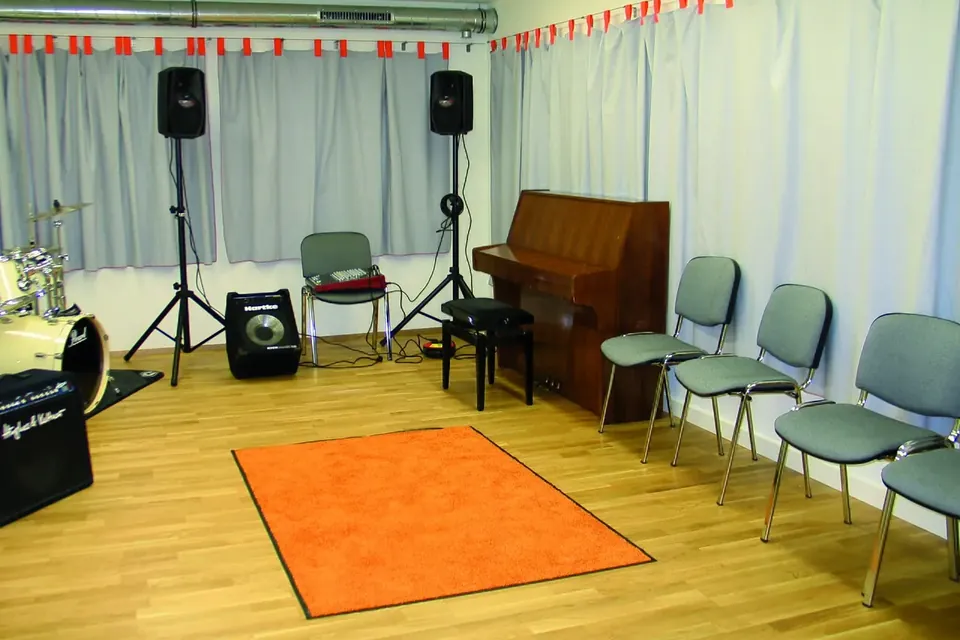
A reading needs chairs, music stands or a table, decent sound, and enough light to read by. Bars, libraries, community rooms and rehearsal studios outside peak hours all work. Our guide to evaluating rehearsal space covers what to check. Costs are usually limited to the room and printing; some series cover them with a small suggested donation or by partnering with a venue. If you start taking money from the public or applying for grants, read our explainer on fiscal sponsorship.
Keeping it going
- Fix a regular slot (for example, the same weeknight each month) and announce the next date at every event.
- Keep a simple mailing list with consent; it will outlast any social platform.
- Share the load. A rotating team of two or three organisers is far more durable than one heroic founder.
- Track which scripts went on to further development or production; it helps you attract writers and funders.
If a play is ready for more than a single evening, the next step is often a development residency; see play development residencies.
Sources and further reading
- National New Play Network, New Play Exchange.
- Dramatists Guild of America, official site.
- Liz Lerman, Critical Response Process.
- Actors' Equity Association, official site.
 Reads & auditions
Play development residencies
What residencies and reading programmes include, how to apply and the red flags to watch for.
 Reads & auditions
Preparing a cold read
What to do in the minutes you have with the sides, and how to take a redirect.
 Rooms & community
Finding rehearsal space
Size, floor, sound, access, booking terms and insurance: what to check before you pay.