Rehearsal Space: How to Find, Evaluate and Book a Room
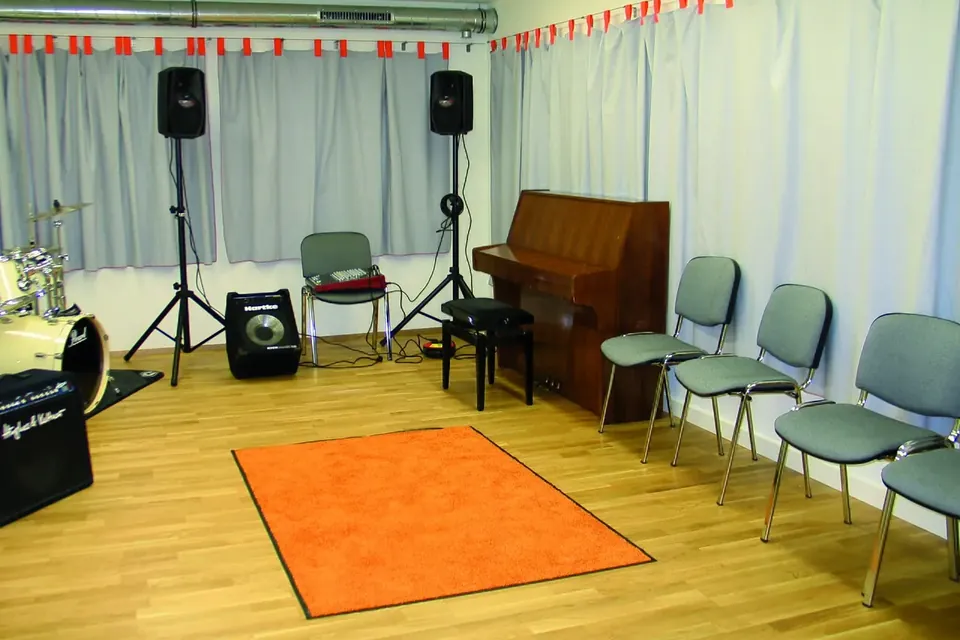
Rehearsal space is one of the biggest recurring costs for independent theatre makers, and one of the easiest to get wrong. A room that looks fine in photos can have a concrete floor, a neighbour's drum kit or a cancellation policy that eats your budget. This guide gives you a checklist to use before paying, and ideas for finding space beyond the obvious studios.
Start with what the work needs
Write down three things before you search:
- The activity: table work, blocking a play, dance or fight choreography, music, auditions, self-tapes or a small showing. Each needs a different room.
- The footprint: the playing area of the eventual stage plus space around it for actors offstage, the director and a stage manager's table. If you are rehearsing for a specific venue, get its stage dimensions and tape them out.
- The schedule: total hours, which days, and whether you need the same room every time (so you can leave a set or tape marks) or can move.
The checklist
Size and shape
- Is the stated size the usable floor, or does it include pillars, storage or a piano?
- Ceiling height matters for lifts, stage combat with weapons, and anything above head height.
- Mirrors are essential for dance and distracting for some acting rehearsals; ask whether they can be curtained.
Floor
- For movement, dance or physical theatre, ask for a sprung or floating floor, ideally with a dance surface (vinyl marley) on top. Repeated jumping on concrete, even under carpet or tile, increases the risk of injury.
- Ask whether you may put down spike tape and what kind; some studios forbid tape that leaves residue.
- Can you wear outdoor shoes, character shoes or heels? Some dance floors prohibit them.
Sound
- Visit at the time you would rehearse. Neighbouring rooms, a bar downstairs or street noise can make quiet scenes impossible.
- Ask about volume limits if you will use amplified music, and whether there is a sound system or just a Bluetooth speaker.
- For music, check whether any piano is tuned regularly and whether it is acoustic or digital.
Light and air
- Is there daylight, and can the room be blacked out for video or lighting tests?
- Ventilation and temperature matter during long, physical rehearsals. Ask about heating and air conditioning, and whether windows open.
Access and facilities
- Is there step-free access to the room and to a toilet? Is the lift reliable? In the United States, the Americans with Disabilities Act sets accessibility obligations for many public accommodations, but older buildings vary widely, so ask specific questions rather than relying on a general "accessible".
- Toilets, water, somewhere to sit during breaks, and a place to store bags safely.
- Late-night access and building security if you rehearse after hours.
- Is there storage for props or set pieces between sessions, and at what cost?
Equipment
- Chairs, tables, music stands, a piano, a sound system, rehearsal blocks, a whiteboard.
- For self-tapes: a plain backdrop, lights and a quiet room; see our self-tape guide for what makes a good taping space.
- Wi-Fi strength if you need to stream, video call a collaborator or run a hybrid rehearsal.
Booking terms that matter more than the hourly rate
Two rooms with the same advertised price can cost very different amounts once terms are applied. Read and ask about:
- Minimum booking length and whether setup and cleanup time is included.
- Cancellation and rescheduling: how much notice you must give and what you lose. This is critical if your actors have unpredictable day jobs or audition schedules.
- Deposits and when they are refunded.
- Overtime: what happens if you run five minutes over.
- Block or off-peak rates: many studios charge less for weekday mornings, same-day bookings or bulk hours. Ask; it is often not advertised.
- Guests and audiences: inviting people to a showing may require a different booking, a different room or extra insurance.
- Taxes and fees added at checkout.
Get the final terms in writing (an email confirmation is fine) before you share dates with your company.
Insurance
Many venues ask renters, especially for showings or events, to provide a certificate of general liability insurance naming the venue as an additional insured. If you are not sure whether you need one, ask before booking. Short-term event policies are available for individual artists and small companies through specialist brokers and some arts service organisations. Insurance requirements are a sign the venue takes risk seriously, not something to dodge.
Where to look
- Dedicated rehearsal studios: the most predictable option, with online booking and clear rates.
- Arts service organisations: in New York, A.R.T./New York supports nonprofit theatres and has long run subsidised rehearsal and performance space programmes. Many cities have an equivalent alliance or arts council worth contacting.
- Classifieds: NYFA Classifieds includes listings for spaces as well as jobs and opportunities.
- Theatres and dance studios off-peak: venues between productions, studios on weekday mornings.
- Community and faith spaces, libraries, schools: often cheap or free for nonprofit or community projects, with fewer frills and earlier closing times.
- Shared workspaces for artists: some membership workspaces include rehearsal hours or member discounts. Our guide to joining an artist co-op or shared workspace covers what to check.
- Work-trade: some studios exchange room hours for front-desk or cleaning shifts; read our guide to desk-exchange and work-trade arrangements before signing up.
Visiting a room: a five-minute routine
- Walk the route from the street, timing stairs and lifts.
- Stand in the room in silence for a minute and listen.
- Jump gently a few times to feel the floor.
- Check the toilets, the temperature and the phone signal.
- Ask to see the written booking and cancellation policy.
Sharing costs
Companies often split a long block booking: one company takes mornings, another evenings. If you do this, put the split in writing, agree on who is responsible for damage and cleaning, and make sure the venue allows sub-letting. Groups that share space regularly sometimes formalise this as a collective; see what an artist co-op is and how co-ops are run.
Sources and further reading
- U.S. Department of Justice, ADA.gov.
- Alliance of Resident Theatres/New York, A.R.T./New York.
- New York Foundation for the Arts, NYFA.
 Reads & auditions
Self-tape setup
Camera, framing, eyeline, light and sound for a clean audition tape without expensive gear.
 Rooms & community
Live-work: an apartment as a studio
Zoning, lease clauses, noise, ventilation and insurance before you rent a home to work in.
 Rooms & community
Joining a co-op or shared space
Legal form, governance, costs, contracts and the questions to ask current members.