Live-Work Spaces: Renting an Apartment That Doubles as an Artist's Studio

For many painters, illustrators, musicians and actors, the cheapest studio is the one you already pay rent on. Working where you live saves a second lease and a commute, but it raises questions a normal tenant never asks: is this use allowed, will the neighbours hear it, what happens to the air when the solvents come out, and who pays if something goes wrong? This guide walks through the checks, in the order that saves the most trouble.
If you have not signed anywhere yet, the easiest problem to solve is the one you never take on: when you shortlist apartments to rent with your practice in mind from the start, the layout, the floor and the lease do half of the work that the checks below would otherwise have to do.
Three layers of rules
Whether you can work in an apartment depends on three separate sets of rules, and a "yes" from one does not answer the others:
- Zoning decides what activities are allowed on a piece of land: residential, commercial, manufacturing or a mix.
- Building and fire codes decide how a space must be built for the way it is occupied: exits, fire separation, sprinklers, ventilation.
- Your lease decides what the landlord has agreed to. It can be stricter than the law, and often is.
Zoning: the "home occupation" rule
Most cities allow some work at home as an accessory to living there, usually called a home occupation. The conditions are what matter. New York City's Zoning Resolution is a useful example because it was updated recently: since the amendment of 6 June 2024, a home occupation in NYC may occupy no more than 49 percent of the dwelling unit's floor area and in no case more than 1,000 square feet, must be carried on by the people who live there (with one outside employee allowed for the practice of a profession), and must not produce "offensive noise, vibration, smoke, dust", fumes or fire hazards. Selling goods made elsewhere, outdoor displays and clients queuing outside are not allowed (NYC Zoning Resolution, Section 12-10).
A quiet desk, an easel or a drawing table fits comfortably within rules like these. A pottery kiln, a spray booth, regular paid lessons or a band rehearsing three nights a week may not. Before you sign, find your city's definition (search the zoning code for "home occupation") and compare it with what you actually plan to do.
Live-work units and artist lofts
Some buildings are designed for living and working from the start. The International Building Code, which most US states adopt with local changes, treats a "live/work unit" as a dwelling with a non-residential area; in the 2021 edition (Section 508.5) the unit is capped at 3,000 square feet, the work area at 50 percent of the unit, and the number of non-resident workers at five, with extra fire-protection requirements (2021 International Building Code, chapter 5). If a listing calls itself "live-work", ask whether it was approved as such or simply has a large open room.
New York shows how tangled artist housing can become. In parts of SoHo and NoHo zoned for manufacturing, the city allowed "joint living-work quarters for artists", open only to artists certified by the Department of Cultural Affairs, which describes the certification as being for "fine artists working on a professional level who demonstrate a need for a live/work loft" (NYC DCLA, artist certification). On 15 December 2021 the city adopted a Special SoHo-NoHo Mixed Use District that allows ordinary residential use alongside those artist units (NYC Department of City Planning).
Elsewhere in the city, generations of artists lived in former factory lofts without legal residential status. The state Loft Law (Article 7-C of the Multiple Dwelling Law, administered by the Loft Board created in 1982) gives some of these "interim multiple dwellings" a path to legal status and rent protection. Coverage depends on dates: the June 2019 amendments, for example, cover tenants who lived in a unit for twelve consecutive months between 1 January 2015 and 31 December 2019 (NYC Loft Board, frequently asked questions). The lesson for anyone renting today: a loft that is not legal for residence can leave you without the protections an ordinary tenant has. In NYC, the building's certificate of occupancy, searchable online, states its legal use.
Lease clauses to read twice
Ask for the full lease before you commit and look for these clauses:
- Use clause. "Residential purposes only" or "no business use" may be read as forbidding a studio. If your work is quiet and private, ask for a short written rider confirming that artistic work at home is allowed.
- Nuisance and quiet hours. Most leases and building rules ban noise that disturbs other tenants, often with set quiet hours.
- Alterations. Soundproofing panels, a sink for washing brushes, extra shelving or a ventilation fan usually need written consent, and you may have to remove them at the end.
- Visitors and clients. Students, sitters or customers coming and going may breach the lease even where zoning allows them.
- Condition and deposit. Paint on floors, clay dust and plaster are the usual reasons for deposit deductions. Photograph the floors and walls on move-in day and protect them.
- Insurance requirement. Some leases require tenants to carry liability insurance; check whether a home business changes what you need.
Noise
Noise is the most common source of conflict for musicians, singers and actors rehearsing at home. Visit at the hours you would work, knock on a shared wall and listen from the hallway. Top-floor and corner units, concrete construction and rooms that do not share a wall with a neighbour's bedroom help more than any foam panel. For loud or long sessions, a few hours a week in a rented rehearsal room is often cheaper than a dispute with the building.
Ventilation and materials
Many art materials are safe at home with ordinary care; some are not. In the United States, the Labeling of Hazardous Art Materials Act of 1988 requires art materials to state that they conform to the ASTM D4236 standard, and products with chronic health hazards to carry warning labels (US Consumer Product Safety Commission). Read those labels before choosing an apartment, because they tell you what the space needs:
- solvents, oil mediums, spray fixatives and resins call for windows that open on opposite sides or an exhaust fan that vents outdoors;
- kilns need a dedicated electrical circuit, clearance from walls and the landlord's written approval; many leases and insurers will say no;
- dust from clay, pastels and sanding is best handled with wet cleaning, not sweeping, which matters in carpeted rooms.
Insurance
A standard home policy is written for a home, not a business. The Insurance Information Institute notes that a homeowners policy probably covers business equipment only up to about $2,500 at home and $250 away from it, and usually excludes business liability, such as a client injured during a session (Insurance Information Institute). Renters' policies have similar limits. Tell your insurer what you do at home and ask about an endorsement for incidental business use, a separate equipment policy or a small business owner's policy.
How to check a listing
Most of the screening can happen before you visit: when you browse apartments to rent online, look for ceiling height, windows that open, top-floor or corner units and any mention of a home office, and save the remaining questions for the landlord or agent. Then, at the viewing:
- Ask what the building is zoned and approved for, and look up the certificate of occupancy or its local equivalent.
- Read the use, nuisance and alterations clauses, and ask for a written rider if your work is not obviously residential.
- Check the light at the time of day you work, the number of outlets and whether circuits trip when a heater and a lamp run together.
- Find where the air goes: openable windows, extractor fans, and whether your work area would be the bedroom.
- Listen for noise in both directions, and ask current tenants about building rules.
- Call your insurer before you sign, not after.
If the answer to most of these is no, a shared studio may suit you better than a live-work apartment. Our guides to joining a co-op or shared workspace and desk exchange programmes cover the alternatives.
Sources and further reading
- New York City Department of City Planning, Zoning Resolution, Section 12-10, definition of "home occupation" (last amended 6 June 2024).
- New York City Department of City Planning, Special SoHo-NoHo Mixed Use District (adopted 15 December 2021).
- NYC Department of Cultural Affairs, artist certification for joint living-work quarters.
- NYC Loft Board, frequently asked questions; New York State, Multiple Dwelling Law (Article 7-C).
- NYC Department of Buildings, certificate of occupancy.
- International Code Council, 2021 International Building Code, Section 508.5, live/work units.
- US Consumer Product Safety Commission, art materials and the Labeling of Hazardous Art Materials Act.
- Insurance Information Institute, insuring your home business.
 Rooms & community
Finding rehearsal space
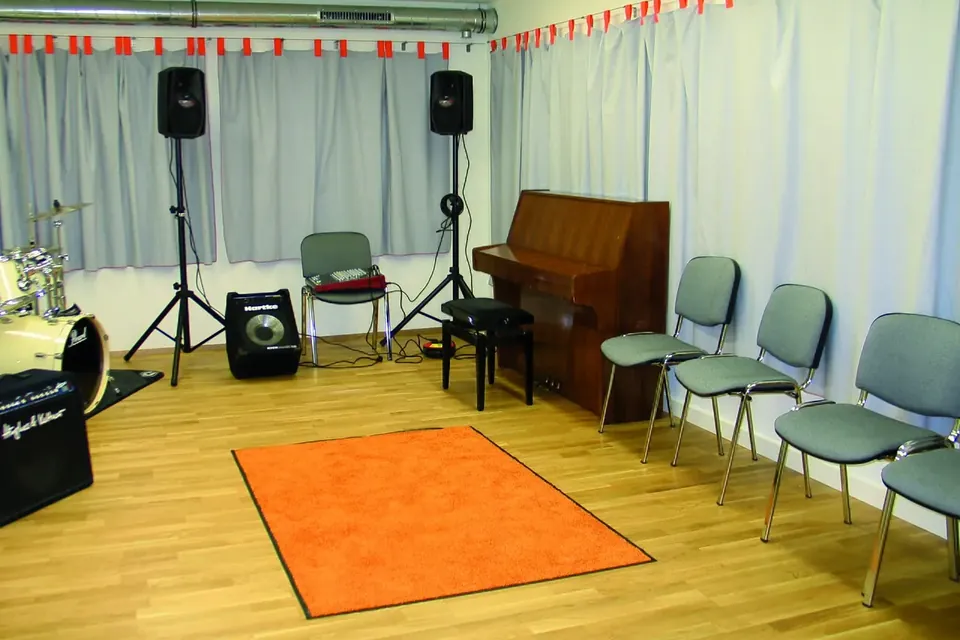
Size, floor, sound, access, booking terms and insurance: what to check before you pay.
 Rooms & community
Joining a co-op or shared space
Legal form, governance, costs, contracts and the questions to ask current members.
 Rooms & community
Desk exchange and work-trade
How volunteer-for-space deals work, what is fair, and the labour and tax questions to ask.