How to Prepare for a Cold Read Audition

A cold read is an audition, class exercise or reading where you perform text you have had little or no time to study. Nobody in the room expects a finished performance. What they are watching for is whether you understand the scene, make a clear choice, stay connected to your partner and can adjust when asked. All four can be practised.
What "cold" usually means in practice
The term covers a range of situations, and it helps to know which one you are in:
- Same-day sides. You arrive and are handed pages (the "sides") a few minutes to an hour before you go in. This is common for commercials, co-star roles and replacement calls.
- Truly cold. A director hands you a script in the room and asks you to read now. This happens in classes, callbacks for a different role, and table reads.
- Reading a new play. In a reading series or workshop you may get the script a day or two ahead, rehearse briefly, and read with scripts in hand in front of an audience. Here the goal is to serve the writer: clarity matters more than polish.
In every case you are allowed, and expected, to hold the script. Trying to memorise in ten minutes usually backfires: you lose lines, lose your partner and spend the scene fighting your own memory. When you do have days rather than minutes, our guide on how to memorize lines sets out what research on actors suggests.
The first five minutes with the sides
Use a fixed order so that nerves do not decide where your attention goes.
- Read the whole thing once, fast, for story. Who are these people, where are they, what happens? Do not act it in your head yet.
- Find what your character wants from the other person. Phrase it as an action you can play: to get her to stay, to make him admit it, to get out of the room without a fight. A want aimed at the other character gives you somewhere to look and something to do.
- Find the turn. Almost every scene has a moment where something changes: a piece of news, a refusal, a confession. Mark it. Your reading should be visibly different on either side of it.
- Read the stage directions and the top of the page. They often contain the circumstances that make sense of the dialogue: the time of day, what just happened, who else is present.
- Look for clues in the writing. Interrupted lines (dashes), trailing lines (ellipses), repeated words and very short replies all tell you something about rhythm and pressure.
If you have more time, read it again aloud under your breath, then once more focusing only on the other character's lines. Listening is half of a cold read and most actors underprepare it.
Making a choice
A clear, specific choice that turns out to be "wrong" is more useful to a director than a vague, careful reading. A specific choice shows that you can make decisions and gives the director something to adjust. The safest choices are the ones grounded in the text: if the character says she is fine three times, the repetition is a gift, and playing someone who is plainly not fine is defensible.
Avoid choices that need explaining. If the scene is a breakup and you decide to play it as a comedy, you may be right, but you will need the director to understand why within a few lines. On a cold read, simple and strong usually beats clever.
How to handle the page
The physical technique of reading from a script while acting is the part beginners find hardest, and the part that practice fixes fastest.
- Hold the pages at chest height, in one hand, so your face is not hidden and your eyes only travel a short distance.
- Keep your thumb near your place and slide it down as you go, so you can find the next line instantly.
- Look down, take the line in, look up, say it. Grab a phrase or a whole short line with your eyes, then deliver it to your partner. You do not need to look up for every word; you need to look up for the important ones, especially the last words of a line and the turn of the scene.
- Do not speak to the page. If you must look down mid-line, pause rather than read the rest into the paper.
- Listen with your head up. While the reader speaks, look at them. Find your next line only once you have taken in what they said; the reaction is part of your performance.
Practise this at home with any script: a newspaper article read aloud to a friend works too. Ten minutes a day for a couple of weeks makes the mechanics almost automatic.
Working with the reader
In many auditions your scene partner is a casting assistant or reader who may give you very little. Do not wait for them to give you energy; play your action on them as if they were the most important person in your life at that moment. If you are taping or reading in a small room, keep your focus close to the camera or to the reader's position as directed. If the casting notice or the person running the room gives eyeline instructions, follow them exactly.
Taking a redirect
A redirect ("try it again, but this time you already know he's lying") is good news: it usually means they want to see whether you can adjust. Listen to the whole note, ask one short question if it is genuinely unclear, then make the change big enough to be noticed. A common mistake is to repeat the first reading with a small variation. If the note changes the circumstances, let it change your tempo, volume and where you look as well.
What not to worry about
- Stumbling on a word. Fix it simply and move on; do not apologise or restart unless asked.
- Accents and dialects, unless the breakdown requires one. A clear reading in your own voice is better than a shaky accent.
- Props and blocking. Stay mostly still, especially on camera. Small, motivated movement is fine.
Practising cold reading
Cold reading is a skill, so it improves with repetitions under mild pressure. Options that cost little or nothing:
- Swap scripts with another actor and read unseen scenes to each other with a timer.
- Volunteer for new-play readings. Writers need actors who can make a page live quickly, and you get regular, low-stakes practice. Our guide to running a cold read series explains how these work.
- Read aloud every day: plays, short stories, news. Focus on looking up at the ends of sentences.
- Record yourself on a phone reading a scene you have never seen, then watch it back once with the sound off. You will see immediately whether your eyes are on the page or on your partner.
Union and safety notes
If you are a member of a performers' union, check its rules on auditions before accepting unusual requests, such as being asked to pay to audition or to perform material that was not described in advance. SAG-AFTRA and Actors' Equity both publish guidance for members on auditions and on reporting harassment; links are on our artist resources page. In California, the Krekorian Talent Scam Prevention Act restricts businesses that charge performers for audition opportunities.
Sources and further reading
- SAG-AFTRA, official site: member resources on auditions and casting.
- Actors' Equity Association, official site: audition information for stage actors.
- Our related guides: self-tape setup, running a reading series.
 Reads & auditions
Self-tape setup
Camera, framing, eyeline, light and sound for a clean audition tape without expensive gear.
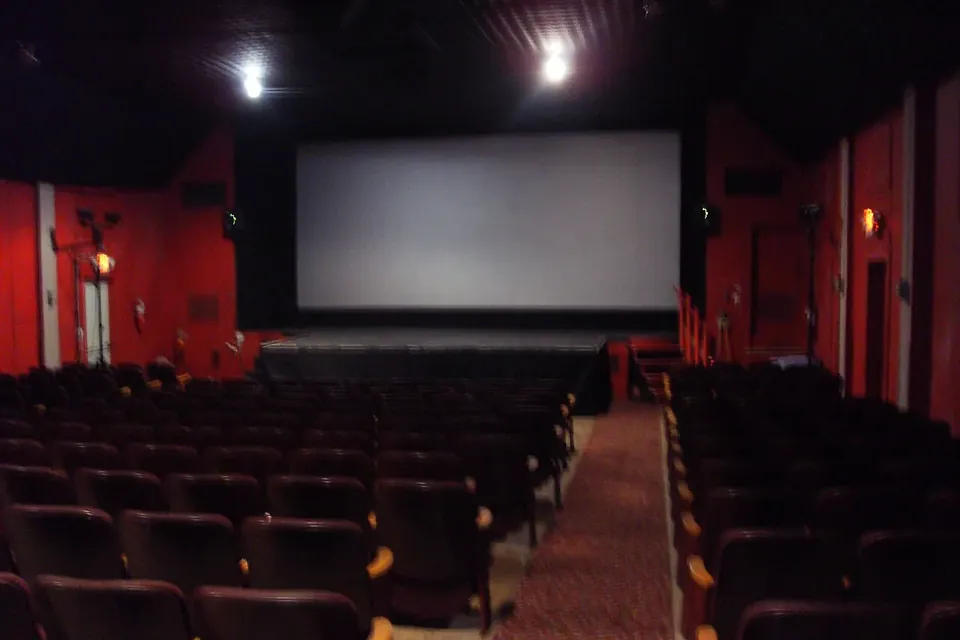 Reads & auditions
Running a reading night
Choosing scripts, casting, rights, rehearsal time and a feedback session that helps the writer.
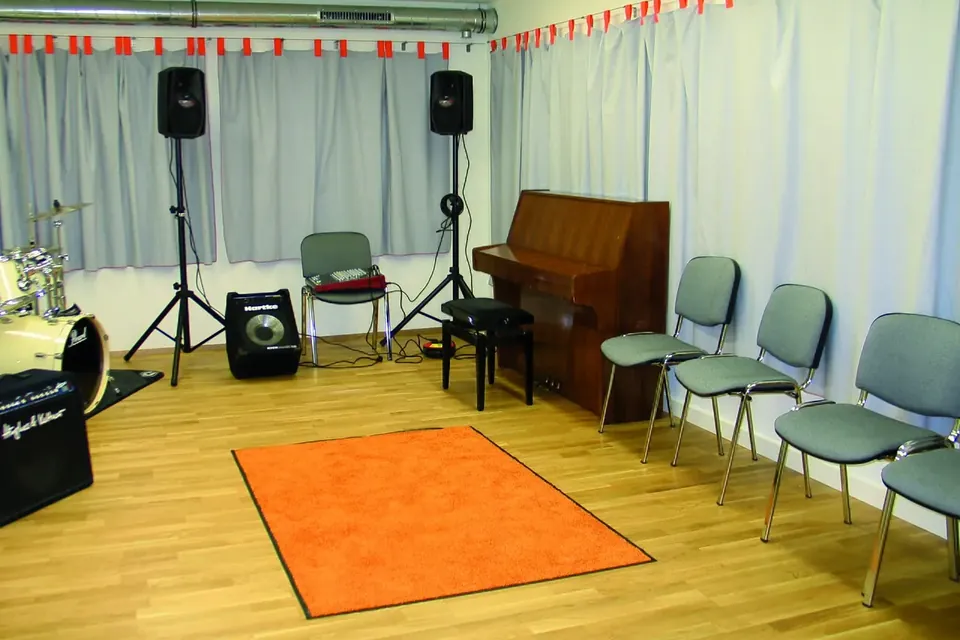 Rooms & community
Finding rehearsal space
Size, floor, sound, access, booking terms and insurance: what to check before you pay.