How to Write a Monologue: Structure, Stakes and a Worked Example
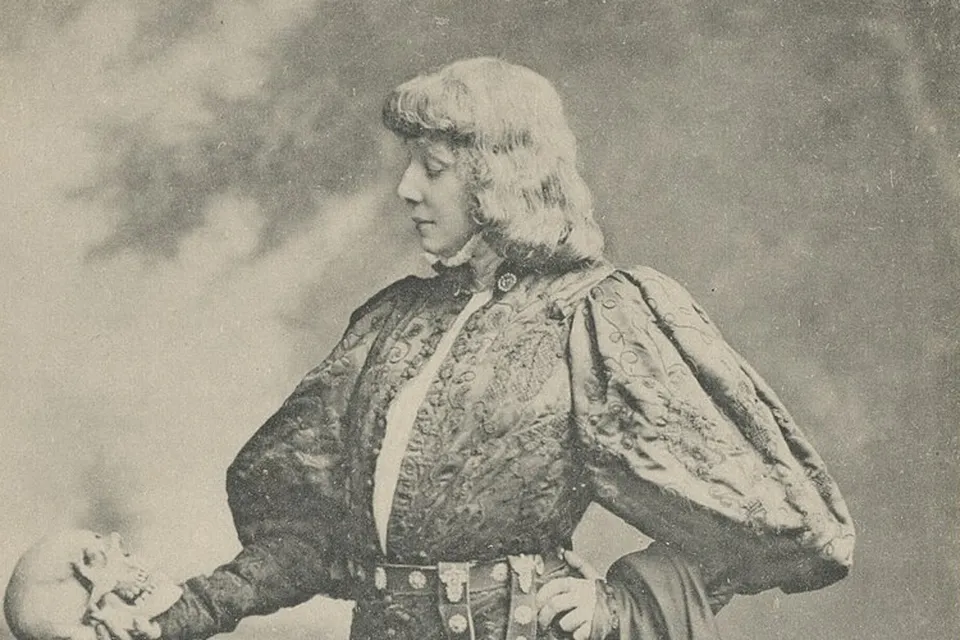
Most actors meet monologues as something to choose. Sooner or later many want to write one: for a showcase, a self-tape where original material is allowed, a scratch night, or the first scene of a play. A good monologue is not a speech about a feeling. It is one person trying to get something from someone, out loud, and changing as they go. This guide sets out how to build one, then takes apart a short original example.
If you are looking for a speech to perform rather than one to write, start with our method for choosing an audition monologue: most of the questions it asks of a published speech also apply to your own draft.
Monologue, soliloquy, tirade: what you are writing
A monologue is a long, unbroken speech by one character. Two neighbouring forms are worth separating before you start, because they change who the character is talking to. In a soliloquy the character is alone, or behaves as if alone, and thinks aloud; the audience overhears. In a monologue in the strict sense, someone else is on stage, or on the other end of a phone, and the speech is aimed at them. A tirade or rant is a monologue that has given up on persuasion. The soliloquy entry on Wikipedia gives the classic examples and the history of the term.
For acting purposes the strict monologue is the most useful, because a listener gives the actor something to play against. Even a soliloquy works best when the speaker is arguing with someone: an absent person, a younger self, or the audience treated as a jury.
The four things every monologue needs
1. A listener
Decide exactly who hears the speech and why they have not interrupted. A sister who has just been told to leave, a landlord at the door, a judge at sentencing. The listener's silence must be explained by the situation: they are shocked, they are waiting for their turn, they are not allowed to speak, or they have already walked away and the speaker is talking to a closed door. A speech with no listener tends to drift into description.
2. A want, stated in a verb
The character must want something from the listener that the listener can give or refuse in the next minute: to stay, to forgive, to lend the car, to admit the truth. Write it as a verb aimed at a person ("to make him stay"), not as a mood ("to be sad"). This is the idea of the objective that runs through modern actor training from Konstantin Stanislavski onwards: a scene is driven by what a character is trying to do, not by what they feel.
3. An obstacle
Something stands in the way: the listener's anger, a fact the speaker would rather not say, pride, a deadline. Without an obstacle there is no reason for the speech to be long. Every new sentence should be a new attempt to get round it.
4. A turn
At some point the speaker tries something different: drops the argument and tells a story, makes a confession, switches from pleading to threatening, or gives up. That moment of change is what panels and audiences watch for. A monologue that ends in the same place it started is a list. Hamlet's "To be, or not to be" is famous partly because it keeps turning: from death as sleep, to the fear of what dreams may come, to the conclusion that conscience makes cowards of us all. Read it in the free Folger Shakespeare text of Act 3, Scene 1 and mark each place where the thought changes direction.
A worked example
Here is a short original monologue written for this guide. It is fiction; the character and situation are invented. Imagine a woman in her thirties at the door of her father's flat. He has just told her he is selling the family piano, the one she learned on.
No, don't go and put the kettle on, you always put the kettle on. Sit down. Please. (beat) I'm not here about the money. I know what you get from the state pension and I know what the gas cost last winter, you showed me the bill, twice. Sell the telly. Sell the car, you don't drive it after dark anyway. Not the piano.
You know what I remember? Not lessons. Not scales. Mum playing the same four bars of something every night while the potatoes boiled, never the rest of it, just those four bars, and you shouting from the other room "finish it, Ann", and her laughing and never finishing it.
(beat) I don't know what the piece was. I never asked. I thought there'd be time. (pause) So, no. You can't sell it. Not until one of us has found the rest of that tune. Give me a month. Then you can sell whatever you like.
Taking it apart
- Listener: her father, who is trying to escape into the kitchen. The opening line deals with that at once and gives the actor a physical problem to play.
- Want: to stop him selling the piano. Stated plainly in the first paragraph ("Not the piano"), so the audience knows what is at stake within seconds.
- Obstacle: money, which she cannot argue with. Her first tactic, practical alternatives, does not work because he has already thought of them; the speech does not need him to say so.
- Turn: "You know what I remember?" She stops arguing and tells a story. The memory is concrete (four bars, potatoes boiling, a shouted line) rather than a statement of grief.
- Second turn and ending: the admission "I never asked" changes the want from "keep the piano" to "give me time to find something out". The last line is an offer, which ends the speech on an action rather than a feeling.
The example runs to about 200 words, which is roughly a minute and a half spoken with pauses. That is a common length for an audition slot; check the notice for the limit you are writing to.
Drafting, step by step
- Write the situation in two sentences before any dialogue: who is speaking, to whom, where, and what has just happened.
- Write the want as a verb and stick it above the page.
- List three tactics the character might try, in the order they would try them. Each becomes a beat of the speech.
- Find one concrete image: an object, a smell, a remembered sentence. Specific detail does more work than adjectives.
- Write it fast, then cut. First drafts are usually twice too long. Remove every line that explains a feeling the actor can play.
- Read it aloud and time it. Silent reading is always quicker. Speeches written to be read often fall apart in the mouth; this is where you find out.
- Give it to someone else to read. If they cannot tell who the speaker is talking to, or what they want, the draft is not finished.
Common problems
- The backstory dump: the character recounts everything that happened before the scene. Keep only what the listener does not already know and the speaker needs them to hear now.
- The emotional peak with nowhere to go: opening at full volume leaves no room for the turn. Start lower than you think.
- Talking to the audience by accident: if the speech has a listener, every line should be aimed at them.
- Imitation: writing a speech that sounds like a famous one. Panels know the famous ones. Write in the voice of your character, not of a playwright you admire.
- Self-tape blindness: on camera, a speech aimed at a listener just off the lens reads far better than one aimed into the lens. Our self-tape guide covers eyeline and framing.
Performing what you wrote
Writers who also act often under-rehearse their own text because they already know it. Learn it as if someone else had written it: the beats, the tactics, the exact words. Our guide to memorizing lines explains why understanding the structure first makes learning faster. Before you use an original piece in an audition, check that the notice allows original material; many drama school and professional notices ask for published plays only.
Sources and further reading
- William Shakespeare, Hamlet, Act 3, Scene 1, Folger Shakespeare edition, free online text.
- Wikipedia, "Soliloquy" and "Konstantin Stanislavski", consulted 26 November 2026.
- The example monologue in this article is original writing by Sides & Space, free to use for practice and auditions.
 Reads & auditions
Choosing an audition monologue
Read the notice, play close to your casting, build a contrasting pair and time it out loud.
 Reads & auditions
How to memorize lines
Why actors learn meaning before words, and a research-backed plan for getting off book.
 Reads & auditions
Self-tape setup
Camera, framing, eyeline, light and sound for a clean audition tape without expensive gear.