Where to Read Plays for Free (or Nearly): Libraries, Archives and Script Databases for Actors
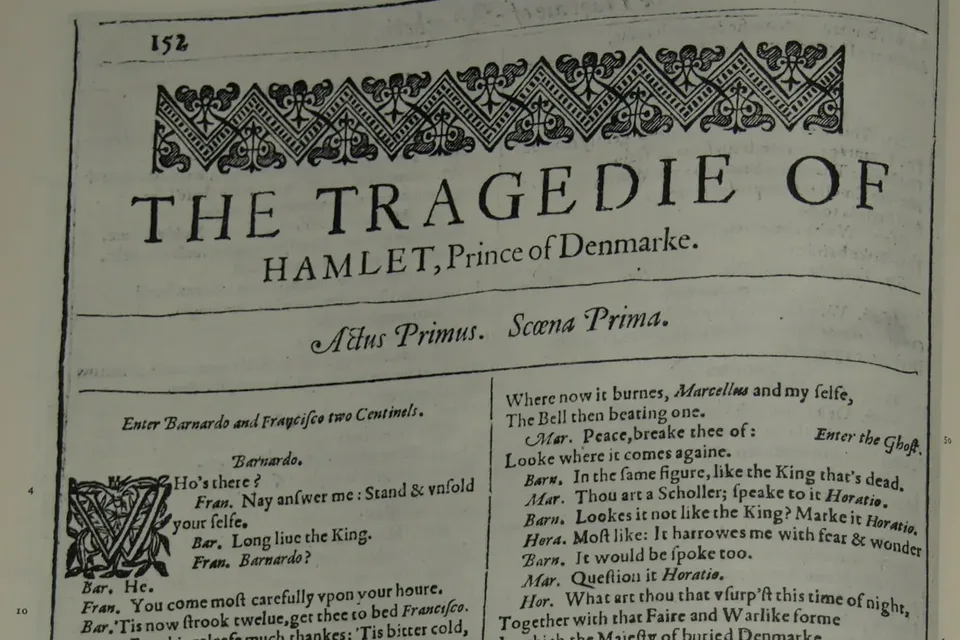
Every acting teacher says it: read the whole play. A monologue lifted from a website, without the scenes around it, gives you lines but not a character, and the person behind the table can usually tell. The problem is cost. A new acting edition is rarely free, and an actor preparing for a winter of auditions may want to read twenty plays to find two speeches. The good news is that most of that reading can be done legally, for little or nothing, if you know where to look. This guide lists the main routes, from the library card in your wallet to the archives where theatre history is kept.
Start with a library card
The single most useful tool for a reading actor is a public library card. Most library systems in the United States, the United Kingdom and elsewhere now lend ebooks as well as paper books, and many of them carry the play collections and anthologies published for students. Through the Libby app, run by OverDrive, you sign in with your card and borrow ebooks and audiobooks from your own library for free. Search by playwright rather than by title: anthologies often hide the play you want under a collection name.
Two habits make the card go further. First, ask for what is not on the shelf. Interlibrary loan lets your branch borrow a book from another library, and a librarian can tell you whether the play you need exists in your system at all. Second, check whether your library gives cardholders access to paid databases from home. Many do, and one of them matters a great deal to actors.
Drama Online, through a library or a school
Drama Online is a subscription database from Bloomsbury sold to universities, colleges, drama schools and some public libraries. According to its own description, it holds "over 5,700 playtexts", along with filmed productions, audio plays and reference books, including plays from Methuen Drama, Faber and Nick Hern Books. Individuals cannot usually subscribe, but if you are a student, or if your public library or alumni association pays for access, you can read a large share of the modern British and international repertoire on screen. Ask at the desk: the database is often listed under a generic "performing arts" heading in the library's e-resources page.
The classics: free and edited
Plays old enough to be in the public domain can be read without paying anyone. For Shakespeare, the most practical edition online is the Folger's: the Folger Shakespeare Library publishes the full text of every play and poem from its own edited series, with modern spelling, act and scene numbers, and character lists that make it easy to find every speech a part has. For other classic dramatists (Chekhov, Ibsen, Molière, Wilde, Shaw's early plays in many countries), older translations and editions are widely digitised by volunteer projects and libraries.
Two cautions. A free translation is often an old one, and its language may sound stiff in an audition room; read it to learn the play, then look for a modern translation of the speech you choose. And "old" does not always mean "public domain": rules depend on the country and on the translator's rights, not only on when the playwright died.
The Internet Archive's lending library
The Internet Archive's "Books to Borrow" collection lends digitised copies of printed books to readers with a free account, one reader at a time, for a limited period. It includes many twentieth-century play editions and anthologies that are out of print and hard to find second-hand. Availability varies by title and the scans are not always comfortable to read on a phone, but for a play last printed decades ago it can be the only practical option short of a research library.
New plays: New Play Exchange
If you want material nobody else in the waiting room is doing, look at new work. The New Play Exchange, created by the National New Play Network with partners including the Playwrights' Center and Chicago Dramatists, is a database where living playwrights upload their scripts. Its founding network describes it as "a cloud-based script database" built to help plays get shared and discovered. At the time of writing, the site listed more than 71,000 scripts and 8,000 monologues, with actor subscriptions starting at $10 for one month of access. It is not free, but a month of searching costs less than one new acting edition, and you can write to the playwright, which matters if you want to perform the piece publicly. Our guide to choosing an audition monologue explains why an unfamiliar speech from a strong new play often serves an actor better than a famous one.
Publishers: perusal copies and acting editions
Licensing houses such as Concord Theatricals, which now includes the Samuel French catalogue, sell acting editions and, for many titles, cheaper digital perusal copies intended for reading before a production is licensed. These are not free, but the publishers' websites are free to browse, and their play pages often give a synopsis, a cast breakdown and the size of each role. That alone can tell you whether a play is worth tracking down before you spend anything.
For finding out what a playwright has written in the first place, reference databases help. Doollee, a long-running guide to plays written in or translated into English since 1956, lists tens of thousands of playwrights and their works with publishers and cast sizes. Its own home page notes that the collection stopped being updated in 2021, so treat it as a starting point for older work rather than a record of new plays.
Watching, not just reading: the NYPL's theatre archive
In New York, the Billy Rose Theatre Division of the New York Public Library for the Performing Arts is one of the library's research divisions devoted to theatre, and it runs the Theatre on Film and Tape Archive, which records Broadway and Off-Broadway productions. As Playbill reported in August 2025, the archive holds "over 4,000 filmed recordings" of shows since 1970; recordings are watched on site, only shows that have closed are available, and, from 2025, New York City teachers can request screenings in their classrooms. The archive is meant for people with a professional or study reason for viewing, so check the library's current rules and book ahead.
What to avoid
- Full scripts on random websites. A complete in-copyright play posted on a file-sharing site or a blog is almost always there without permission. Reading it is a grey area for you; performing from it is not, and the text may be an unreliable transcription.
- Monologue sites without sources. If a site does not name the play, the playwright and the edition, you cannot read the scene around the speech, and you cannot check that the words are right.
- Assuming reading rights cover performance. Borrowing a play from a library lets you read it. Performing it in public, even for free, is a separate question. Our guide to starting a scene study group covers when working on published scenes needs permission.
A simple routine
Keep a running list of plays you want to read, and work through it with the cheapest route first: library app, then your library's databases, then the archives, then a perusal copy or a new-play subscription when nothing else has it. Read each play once for the story, then again for the character you might play. When you are called in with only a few pages, the same habit helps: our guide to preparing for a cold read explains how to work fast with sides. For help beyond scripts, from unions to emergency funds, see our resources directory.
Sources
- Drama Online, About Drama Online (Bloomsbury), consulted 22 November 2026.
- New Play Exchange, home page and subscription options, consulted 22 November 2026; National New Play Network, New Play Exchange.
- Diep Tran, "New York Educators Can Now Show Broadway Archives From the New York City Public Library In Their Classrooms", Playbill, 25 August 2025.
 Reads & auditions
Choosing an audition monologue
Read the notice, play close to your casting, build a contrasting pair and time it out loud.
 Reads & auditions
Preparing a cold read
What to do in the minutes you have with the sides, and how to take a redirect.
 Rooms & community
Starting a scene study group
Classes end, jobs are irregular, and the work still needs a room. How to set up a peer group that actually meets: numbers, format, feedback rules, money and rights.