How to Start a Scene Study Group with Other Actors: Size, Format, Feedback and Rights
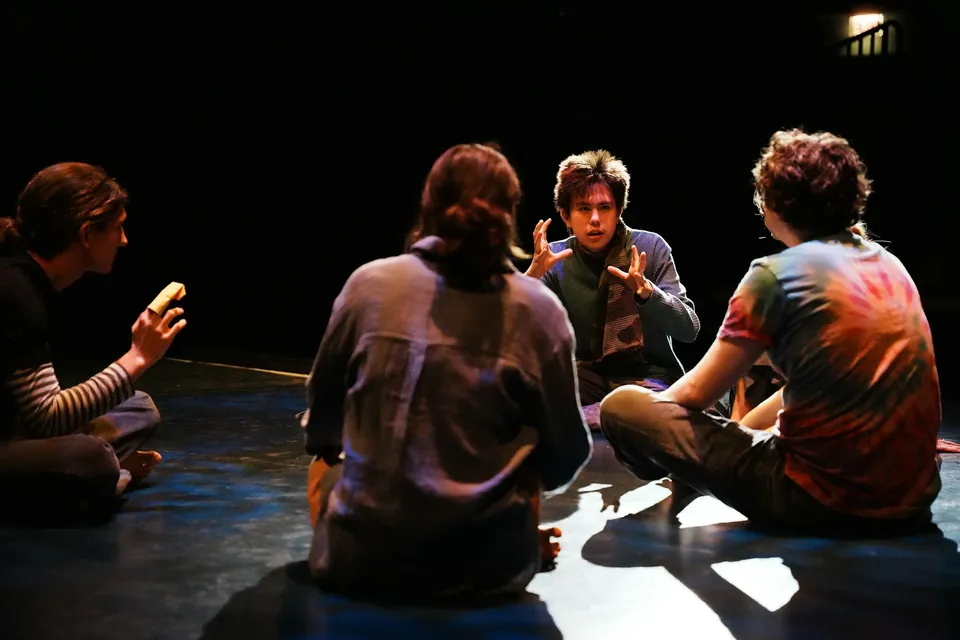
Most actors spend far more time between jobs than in them, and a class is expensive to keep up for years. A scene study group, a handful of actors who meet regularly to work on scenes together without a paid teacher, is one of the oldest answers to that gap. It costs little, keeps your instrument warm and, done well, gives you partners you trust. Done badly, it becomes a social club where nobody rehearses. The difference is mostly in how it is set up.
Decide what the group is for
Before inviting anyone, write one sentence describing the purpose. "Keep working on text between jobs" is a different group from "prepare audition material", which is different again from "develop two-handers we might stage one day". The sentence decides who you invite, how often you meet and what counts as a good session. It also gives you something to point to when, six months in, half the group wants to drink coffee and talk about agents.
Be honest about the level too. A group mixing recent graduates with actors who have twenty years of credits can work, but only if everyone accepts that the session is about the scene, not about status. If you want a group of peers at a similar stage, say so in the invitation.
How many people, and who
The constraint is time on the floor. A two-person scene, worked properly, takes thirty to forty minutes once you count a first run, notes and a second run. In a three-hour session that is four or five scenes, which means eight to ten actors at most if everyone is to work every time. Groups of six to eight are easier to run: people miss sessions, and with fewer members everyone still gets a partner.
Invite people whose work you have seen, ideally in a class or a production, rather than people you only know socially. Look for reliability first. One member who regularly arrives without having learned the lines costs the partner a whole session. It helps to start with a fixed trial period, say eight sessions, after which everyone decides whether to continue. That gives you a graceful exit if the chemistry does not work.
Where to meet
You need a room where people can move, speak at full voice and not worry about neighbours. Living rooms work for table work and small scenes, less well for anything physical or loud. If the group pays for space, the usual checklist applies: floor, sound, access, cancellation terms. Our guide to finding and booking rehearsal space goes through it in detail. Off-peak slots, weekday mornings or late evenings, are often much cheaper, and some studios offer a lower rate for a standing weekly booking.
Other options worth asking about: a community centre or library room, a church hall, a theatre's studio space during the day when nothing is in rehearsal, or a member's workplace after hours. If you belong to a shared studio or artist co-op, the group may be able to book a member slot.
A session format that keeps people working
Unstructured sessions drift. A simple, repeated format helps everyone arrive prepared and keeps the clock honest. One that works for many groups:
- Warm-up, 15 minutes. Physical and vocal, led by a different member each time.
- Scene slots, 30 to 40 minutes each. The pair runs the scene once without interruption, receives feedback, then runs it again with one or two adjustments. The second run is the point: you learn whether a note actually changes anything.
- Cold reading, optional, 20 minutes. Hand out short sides nobody has seen. It is the closest you will get to audition conditions without an audition, and our guide on preparing for a cold read has exercises to use here.
- Planning, 10 minutes. Confirm pairings, scenes and who brings what for next time.
Assign scenes and partners at least a week ahead, and agree an off-book rule: for example, lines learned by the second time a scene is worked. Pairs should rehearse once on their own between sessions if they can, so the group's time is used for work that needs an outside eye.
Feedback without a teacher
This is where most peer groups go wrong. Without someone in charge, feedback tends towards either politeness that helps nobody or a dozen people directing the same scene in different directions. A few ground rules prevent both:
- The actors speak first. They say what they were working on and what they want to know. Feedback then answers that question before anything else.
- Describe before you prescribe. "I stopped believing you wanted him to stay at the moment you sat down" is useful. "You should play it angrier" is a line reading in disguise.
- One or two notes per person, then stop. The pair cannot absorb more before the second run.
- Rotate a facilitator. One member per session keeps time, decides when feedback is finished and gently cuts off a note that is really about the speaker's own interpretation of the play.
- Talk about the scene, not the person. Comments on looks, weight or casting type are off limits unless the actor asks.
Write the rules down and read them at the first session. It sounds formal, but it makes it much easier to hold a member to them later.
Choosing material
Choose full plays, not anthologies of scenes cut loose from their context. Each actor should read the whole play before working on a scene from it: the scene depends on what happened before it and what the character wants afterwards. Groups that work on audition material can borrow the same criteria we suggest for choosing an audition monologue: a part within your casting range, a clear want and a situation that changes in the course of the scene.
Ask each member to buy or borrow their own copy of the play, or use a library copy. Photocopying a whole play for everyone, or passing round a scan, is the kind of copying that copyright reserves to the author and publisher, and play publishers depend on those sales.
Performing scenes: when permission comes in
Working on a scene in a closed room is not the same, legally, as performing it. In the United States, the Copyright Act defines a public performance as one given at a place open to the public, or at any place where a substantial number of people outside a normal circle of a family and its social acquaintances is gathered. A small group rehearsing among itself is generally not that. A "sharing night" with invited friends, a showcase or a ticketed evening may well be.
Do not assume the exemption for non-profit performances covers you. Section 110(4) of the same law applies only to nondramatic literary and musical works, so it does not extend to scenes from plays. If the group wants to show work to an audience, contact the play's licensing agent or publisher first. Ask specifically about scenes shown to an invited audience: the answer, and any fee, is theirs to give. Rules differ in other countries, so check with the relevant agent or your union if you are outside the US.
Money and organisation
Most groups only spend money on the room. The simplest arrangement is to divide the rent equally among members, whether or not they attend a given week, and collect it in advance for a block of sessions, so that one person is not left covering the booking. Keep a shared document with the schedule, pairings, scenes in progress, the ground rules and the money. If someone leaves, their place and their share are filled by agreement of the group.
Once a group starts renting space regularly, taking on new members or talking about producing work, it is starting to look like a small collective. Our guide to how artist co-ops are run covers how shared groups take decisions, handle money and deal with members leaving, and it applies on a small scale too.
When to change or stop
Review the group every few months against the sentence you wrote at the start. Are people arriving prepared? Is everyone getting floor time? Is the feedback still useful? Changing the format, the day or the membership is normal. So is ending a group that has done its job. Many actors look back on a peer group as the place they found a long-term scene partner, a director or the collaborators for their first production. That is a good outcome, even if the group itself does not last.
Sources
- United States Code, Title 17, § 101, Definitions (Legal Information Institute, Cornell Law School): definition of performing a work "publicly".
- United States Code, Title 17, § 110, Limitations on exclusive rights: exemption of certain performances and displays: paragraph (4) on non-profit performances of nondramatic works.
 Rooms & community
Finding rehearsal space
Size, floor, sound, access, booking terms and insurance: what to check before you pay.
 Reads & auditions
Preparing a cold read
What to do in the minutes you have with the sides, and how to take a redirect.
 Running a collective
How co-ops are run
Founding documents, membership rules, decision-making, meetings, money and conflict.